The words ‘expensive’ and ‘safe’ are both relative and highly subjective. More often than not, they shift with personal expectations, habits, and circumstances. Still, questions about cost of living, cost of travel, safety, and day-to-day security are inevitable when considering visiting or moving to Costa Rica. So with my more than 17 years of experience—working, raising a family, and running a business, let me share some insights on what affordability and safety really look like here.
First, Costa Rica is definitely affordable. Second, Costa Rica is very safe. Much of your experience here comes down to how you go about it—how you organize your life, and how you structure your travels.
Costa Rica is Definitely Affordable
Personal finance experts remind us that affordability is driven far more by personal habits than by geography. They point out that there are people earning $50,000/year with $100,000 in savings, and there are people earning $300,000/year, who live paycheck to paycheck. The difference is organization, discipline, and lifestyle choices. The best thing you can do when living in Costa Rica, or anywhere in the world, is to live below your means. Spend less than you earn and establish non-negotiable rules for saving money. Once you do that, nearly every place becomes affordable. If you consistently stretch your budget thin, you constantly feel underwater.
Remember, you likely had certain missions when you decided to travel abroad. These probably included things like “getting to know the culture,” “learning Spanish,” “living a more simple life,” and “doing some travel.” For sure, these can all sound like clichés, but they are also very positive and meaningful goals—so it is important to actually do them.
Get to know the culture. Observe the locals, your neighbors, and the Costa Ricans you interact with every day. Most people here live simply: small homes, older cars, and regular use of public transportation. Air conditioning is less common, and when it exists, it is used sparingly. Locals shop in farmers’ markets, choose less expensive cuts of meat and fish, and rely on staples like rice, beans, and fresh vegetables. Costa Ricans avoid overpriced coffee [because all coffee is good here], and nearly everyone brings their lunch to work. As you embrace these habits, you find living like a local not only lowers your cost of living, but also deepens your connection to the country.
Learn Spanish. This is an investment worth making. It helps keep things inexpensive and it helps keep you safe. Learning the language of the country shows respect and signals you are interested and committed—that you are willing to engage and learn. Without Spanish, you are simply not going to get very far in a Spanish-speaking country. You need to understand prices, negotiate confidently, read situations, and understand what is happening around you.
Live a more simple life. Snuggle into a small 1-bedroom or studio apartment; consider a smaller, older home. Move beyond must-have amenities like a pool, gym, and granite countertops. This is where many people get tripped up—they arrive saying they want a more simple life, but immediately set about recreating the life they had back home. Understandable, yes, but helpful for affordability, no. Simplicity is usually the most sustainable, most affordable, and most rewarding way to live in Costa Rica.
Do some traveling. Definitely do some travel… some. Travel and tourism, even when done on the cheap, still costs money. Settle in and learn to enjoy your home, your garden or small yard, and the small pleasures of a cup of coffee on your patio or tiny terrace. When you do travel, look for bargain accommodations and eat and drink inexpensively, like a local would. An intentionally modest approach to travel keeps costs down and helps you stay grounded in the lifestyle you came to experience in Costa Rica.
Short-term travel into Costa Rica. If you are coming to Costa Rica to travel and enjoy vacation or you are here to learn Spanish or take part in a volunteer abroad program, most of the advice above still applies. However, there are a few specifics to keep in mind. Five-star resorts are not inexpensive in Costa Rica, but they are not inexpensive anywhere in the world. High-end hotels offer high-end services, and everything from beach chairs to taxis is expensive. The best way to experience the affordable side of Costa Rica on a short trip is to join a program that emphasizes meaningful travel or educational travel. Programs like Spanish immersion, volunteer work, and even scuba diving are usually structured where airport pick-up is included, you live with a local host family, and meals are part of the package. These programs also build in free and low-cost activities like salsa lessons, cooking classes, movie nights, and soccer matches. Most importantly, they connect you to the local fabric of the country, and you see how people actually live here. These kinds of structured programs are a great way to begin your travels and are often where you find the best value for your money.
Practical Notes: Living Cheap in Costa Rica
Whether you are in Costa Rica for a short trip or staying long-term, the fundamentals of keeping costs down are the same. If you are here short-term, staying with a local host family is one of the best values—you get home-cooked meals, cultural insight, and a built-in support system. You can also rent an apartment and cook for yourself; see the Eating Cheap in Costa Rica table below.
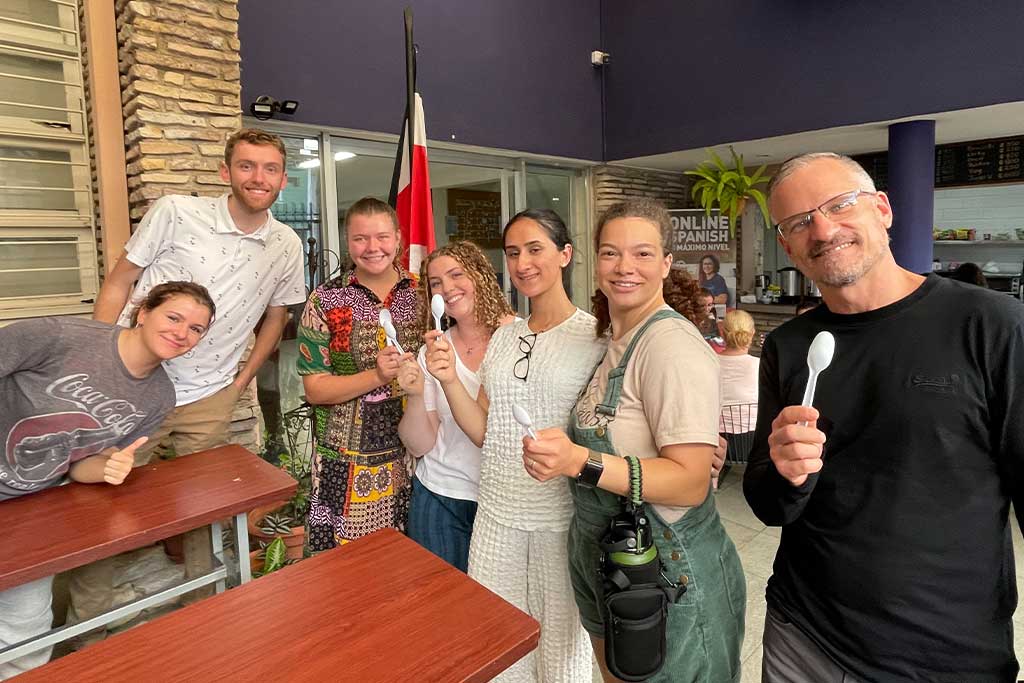
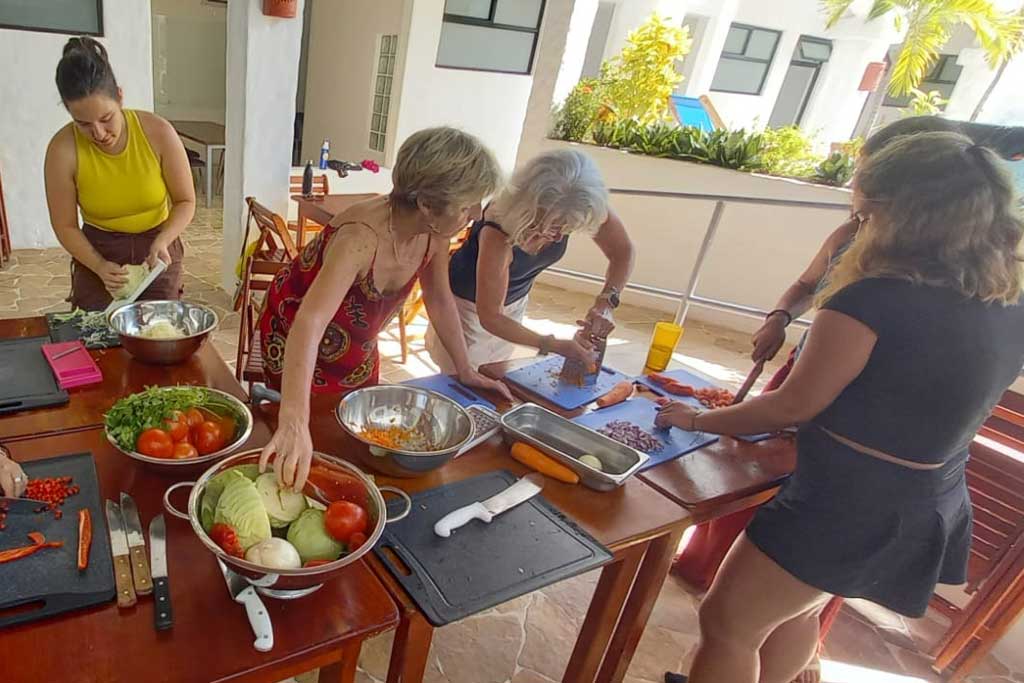
If you are here for the long-term, there is no way around it—learn to cook. Cooking is a life skill, part of good self-care, and it saves you lots of money. Making your own meals is the simplest way to keep your cost of living low. Get a small cookbook or look up easy recipes online. Cook together with friends and colleagues. Shop at local markets where produce, staples, and proteins are far less expensive than in restaurants and imported-goods stores. Eating out is costly, and delivery services like UberEats are even more so. Even a “cheap” lunch at $6/day quickly becomes $180/month—and that is only one meal. Watch what your Costa Rican friends and colleagues do; observe how they economize and you can quickly learn the local rhythm of affordable living.
Eating Cheap in Costa Rica
| Markets |
|
| Fruits & Vegetables | Avocado, Banana, Bell Peppers, Broccoli, Cabbage, Cauliflower, Coconut, Lettuce, Mushrooms, Plantain, Strawberries, Tomatoes, and Zucchini |
| Protein | Chicken thighs, Chicken liver/gizzard/heart, Eggs, Ground Beef, Ground Pork, Legumes (dried or canned), Trout, Tuna (canned), Yogurt |
| Staples | Bread, Pasta, Rice, Potatoes, Tortillas, Oats |
| Drinks | Tea, Coffee, Tap Water, Limes & Lemons for homemade drinks |
| Eating Out |
|
Rent & Housing Costs in Costa Rica
As mentioned above, when coming to Costa Rica for a short-term stay, joining a structured educational travel program and living with a host family is the most affordable option. A 2-week stay in a private room with a host family typically costs $250-$300/week and includes breakfast and dinner. If you are willing to share a room with another traveler, the cost may drop to around $200/week.
When living long-term in Costa Rica, rent should ideally be no more than 20%–25% of your net income, and never more than 30%. For example, if you earn $1,000/month, your rent should fall between $200 and $300. Observe how local Costa Ricans do it—most people live with their extended family or they have housemates to keep costs manageable. It is important to move beyond tourist-level prices found on platforms like AirBnB; those listings are intended for short-term visitors and do not reflect local housing costs.
In San Jose, you can expect to pay around $200–$275/month for a room in a shared apartment; about $300–$400 for a studio apartment; and $450 for a 1-bedroom apartment. These prices generally include utilities and internet service. Staying to the east side of San Jose offers the best combination of affordability, safety, and convenience with recommended neighborhoods including Cedros, Granadilla, Guadalupe, Los Yoses, Sabanilla, San Pedro, Vargas Araya, and Zapote.
Costa Rica is a Very Safe Country
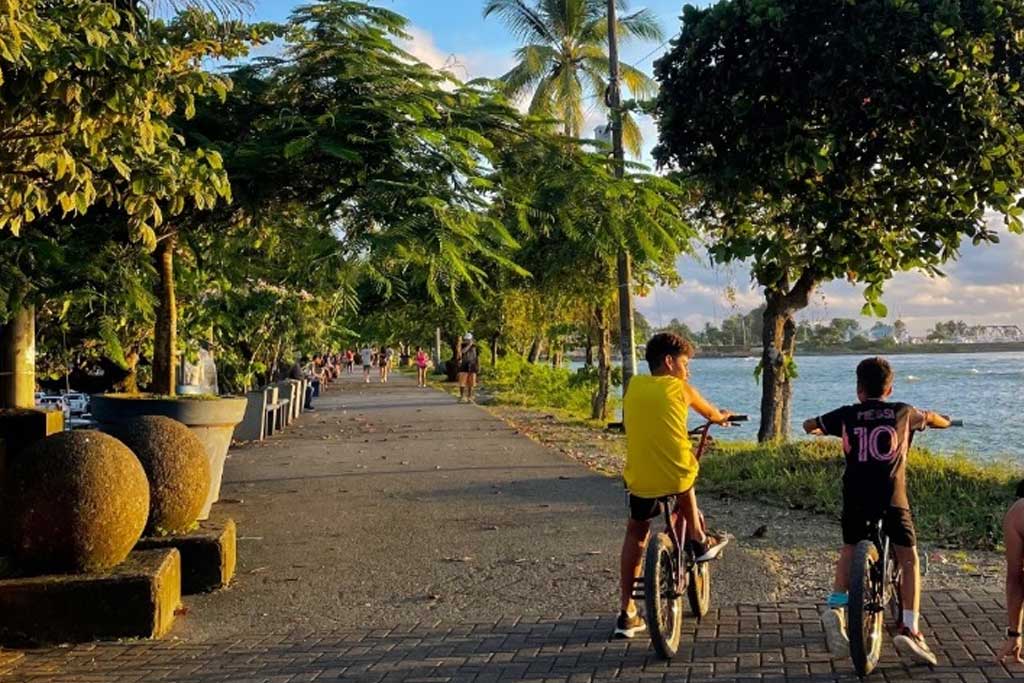
Costa Rica remains one of the safest and most stable destinations in Latin America, especially for travelers, students, and long-term residents. Still, safety is one of the most common concerns people have before arriving and security concerns often arise because of shifting headlines and government advisories. The reality on the ground is far more stable, calmer (“tranquilo”) and much more predictable than news reports sometimes suggest. Day-to-day life here is safe, very livable, and frankly beautiful in so many ways—although common sense and awareness are important personal qualities to have.
In late 2025, the U.S. State Department issued a Level 2 advisory for Costa Rica, noting recent reports of property crimes, financial scams, and a small number of robberies affecting foreign visitors. The advisory referenced criminal groups, break-ins, and isolated incidents of armed robbery. It is important to put this into context. The State Department’s advisory system has 4 levels: Level 1 (Normal Precautions), Level 2 (Exercise Increased Caution), Level 3 (Reconsider Travel), and Level 4 (Do Not Travel). Currently, Costa Rica sits at Level 2, alongside countries such as Belgium, the Bahamas, France, Germany, Italy, the Netherlands, Spain, Sweden, and the United Kingdom. In other words, Costa Rica is categorized similarly to major Western nations most people visit without hesitation. Media coverage often magnifies individual events, but these isolated situations do not reflect life on the ground for residents and travelers.
During my 17 years living in Costa Rica, I have never personally experienced violent crime, nor has anyone close to me been directly affected. I have experienced petty theft, and I have read about break-ins and violence, but nothing more. In contrast, I did directly experience violent crime firsthand in both the United States and the Netherlands when I lived there. The national homicide rate in Costa Rica, which is often used as a rough indicator of broader violence risk, was approximately 17 per 100,000 people in 2023. That number can sound large until you convert it—it represents a fraction of 1 percent (.017% ). Costa Rica, like many countries today, also faces challenges with homelessness, but this is now sadly common even in so-called “world-class” cities such as Los Angeles, New York, Paris, Stockholm, and many others. The reality of modern life is that crime can occur anywhere; however other than a few stark outliers, crime and violence are rarely a reflection of a country’s people and culture. The vast majority of people around the world value human life, family, community, and daily living. It is also important to remember, most crimes are committed by people we know—not strangers lurking in the shadows, but the friends and family closest to us. That is a sobering reality, but a statistically accurate one.
Safety Is Personal: Awareness & Common Sense
We are each responsible for our own security—we are as safe as we make ourselves. This is true whether we are in our home countries or traveling the world. For travelers, the mission is usually knowledge and adventure—to experience new cultures, meet new people, learn languages, and eat good food. Clearly, it is important to stay safe, but it is equally important to remain open and free. Over-focusing on personal safety can easily lead to whitewashed and sanitized resort-style experiences, which may be pleasant, but are not how you truly experience the world. Earth is an amazing place, with all of its positives, challenges, and imperfections—and that is exactly why embracing a spirit of adventure, travel, and education is so important.
If you are affected by crime or violence while in Costa Rica, get the care you need, make a police report, and give yourself space to recover if necessary. It is important to remember, these incidents can happen anywhere—Costa Rica, back home, or even on the plane you flew to get here. None of this is meant to sound cavalier about safety; rather, it is a reminder that with a few practical precautions and a grounded mindset, you can dramatically reduce the likelihood of anything happening at all. Use your head—you are responsible for your own safety. You are in an unfamiliar area, take the same precautions you would in any unknown city or town in your home country. The points below are good advice, no matter where you are in the world.
Being Safe in Costa Rica
| Cash |
|
| Valuables |
|
| Going Out |
|
| Attention |
|
| Getting Around |
|
| Crime |
|
The Rewards of Costa Rica
Costa Rica is an extraordinarily livable place—it is beautiful, safe, and far more affordable than people sometimes assume. It is a country that rewards people who show up with curiosity, humility, and the intention to live with both feet on the ground. You need to observe it, maybe first from a tourist lens, but then you must also participate in it. Study Spanish, shop where locals shop, and eat where they eat. Ride the bus, walk the neighborhoods, and let the country teach you how it works. Most of the fears people carry with them dissolve quickly, replaced by something far better—a sense of belonging and an easy life rhythm. Costa Rica is honest and generous to people who come with open eyes and common sense. Do that, and this place will take incredibly good care of you.
If your goal is to travel or live in Costa Rica, plugging into a structured program and community gives you a smoother start. Professionally run programs—volunteering, internships, and intensive Spanish immersion—provide the support, local insight, and a framework that helps you grow into the country rather than just visit it. Maximo Nivel offers these programs year-round in Costa Rica, Guatemala, and Peru. We help people work, study, and travel abroad—pushing you out of your comfort zone just far enough, while keeping you comfortable.